By Jielis Bikker on 26 Aug 2026, 14:29:13
Installing a Rearview Camera: Better Visibility and Safer Maneuvering
Reversing a truck, van, or machine requires constant attention. Mirrors provide a lot of information, but they don’t always show everything that’s directly behind the vehicle. As a result, a pole, cyclist, coworker, or other vehicle may fall out of the driver’s field of vision.
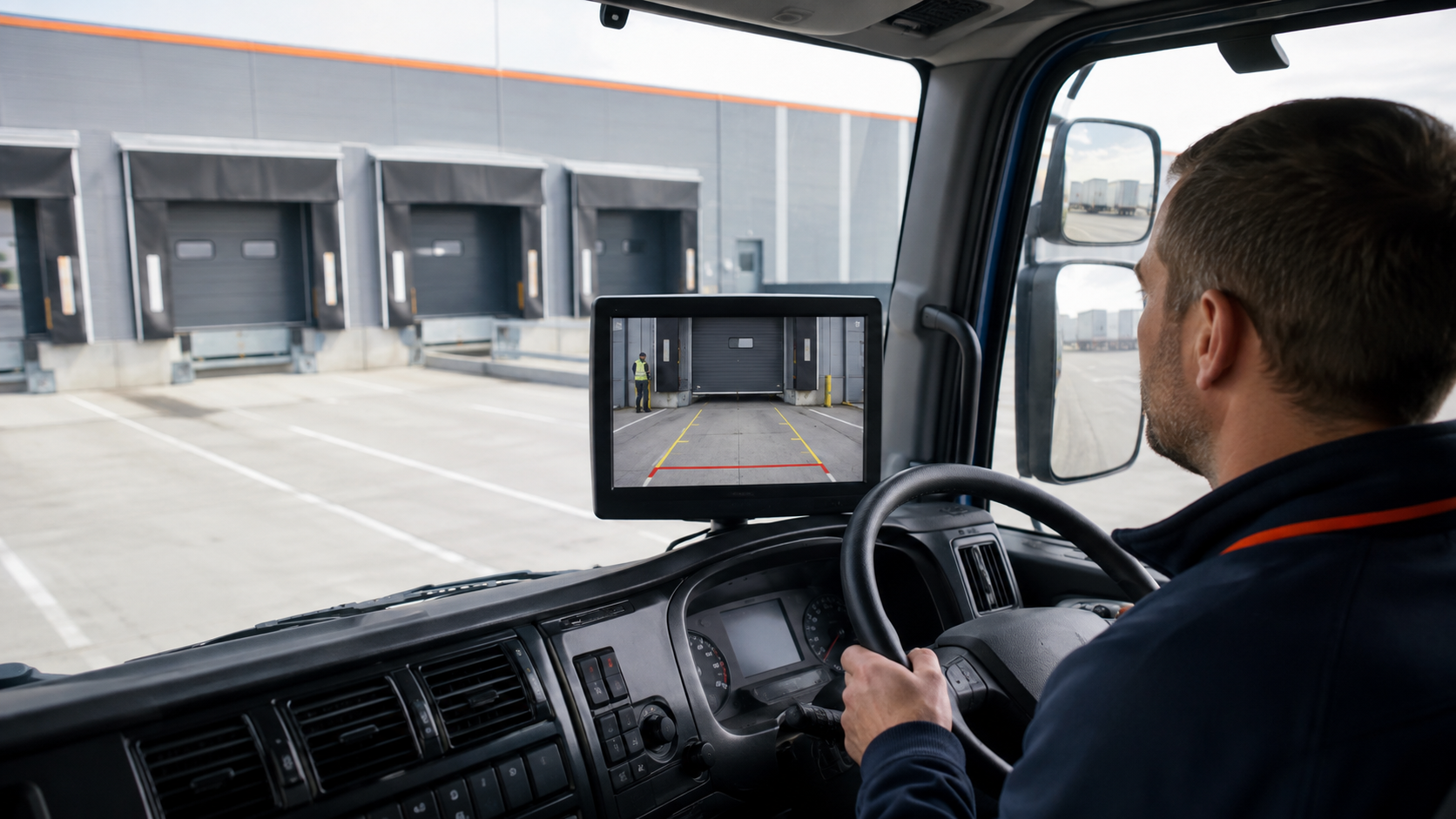
A properly positioned backup camera reduces this blind spot and gives the driver a direct view of the area behind the vehicle. This supports safer and more precise maneuvering in loading areas, construction sites, residential neighborhoods, and other locations where vehicles and people work in close proximity.
The right solution involves more than just a camera. The mounting position, field of view, monitor, lighting, cabling, and daily work environment also determine whether the camera system is truly effective in practice.
Why Install a Backup Camera?
Due to their length, height, and body design, large vehicles naturally have areas that the driver cannot see directly. A significant blind spot can develop especially directly behind the vehicle.
This poses risks during tasks such as:
- Reversing up to a loading dock.
- Maneuvering on a busy company premises.
- Entering or exiting a construction site.
- Reversing in a residential area.
- Turning around in an area with pedestrians or cyclists.
- Working around containers, equipment, or stored goods.
- Parking in a tight or poorly lit space.
A backup camera displays the area behind the vehicle on a monitor in the cab. This provides the driver with additional visual information that might otherwise be missing when relying on mirrors or direct line of sight.
The camera does not replace mirrors, careful observation, or safe driving practices. The system is an additional tool that helps the driver better assess the surroundings.

What are the benefits of a backup camera?
A suitable camera system can offer several practical advantages.
Better visibility of the blind spot
The camera shows what is directly behind the vehicle. Depending on the selected field of view, the driver can see both the area right next to the bumper and a larger portion of the surroundings.
More precise maneuvering
With a clear view of objects, lane markings, and loading docks, the driver can reverse with greater precision. This is especially valuable in locations where there is limited room to maneuver.
Reduced risk of damage
A post, wall, vehicle, or other obstacle can easily be overlooked. Better visibility helps the driver react sooner and can thus help minimize damage and downtime.
Support for traffic safety
In areas where drivers, coworkers, visitors, and road users come into close proximity with vehicles, a camera provides additional information about potential risks.
Reduced reliance on verbal instructions
An attendant remains necessary in some situations, but a camera can prevent the need for someone to stand behind the vehicle for every simple maneuver. Company policies and risk assessments always take precedence in this regard.
For which vehicles is a backup camera suitable?
A rearview camera can be installed on virtually any commercial vehicle or mobile machine. However, the specific model required varies by vehicle type.
Rietveld supplies and installs camera systems for, among others:
- Trucks.
- Tractors with semi-trailers.
- Box trucks.
- Delivery vans.
- Waste collection vehicles.
- Municipal vehicles.
- Construction and utility vehicles.
- Excavators.
- Shovels.
- Forklifts.
- Agricultural machinery.
- Tour buses.
- RV and specialty vehicles.
A standard solution may work perfectly for a box truck, but it may be unsuitable for a vehicle with a roll-off container, interchangeable trailers, or moving machine parts. That’s why the configuration must always match the vehicle’s design and intended use.
Where is the backup camera mounted?
The mounting position has a major impact on the final camera image. In many cases, the camera is mounted as high as possible at the rear. From a higher position, the driver can see a larger area and better estimate the distance to obstacles.
However, the highest position is not automatically always the best. When positioning the camera, the following factors must also be taken into account:
- The shape and height of the vehicle.
- The desired field of view.
- Loading and unloading operations.
- The presence of doors, hatches, or containers.
- Moving parts of the machine or vehicle body.
- Potential contamination from mud or splashing water.
- Accessibility for cleaning and maintenance.
- The routing of cables and connections.
- Protection against branches, cargo, or other contact.
After installation, the camera angle is precisely adjusted. The driver must not only have a wide field of view but, above all, see the area that is relevant while maneuvering.
What field of view do you need?
A wide viewing angle shows a large area behind the vehicle but can cause optical distortion of distances. A narrower viewing angle often provides more detail but shows less of the immediate surroundings.
The right choice depends on the purpose.
For example, a wide angle is practical when:
- Pedestrians may be approaching from different directions.
- The vehicle is maneuvering in busy areas.
- The area immediately behind the bumper is important.
- Space is limited.
A narrower field of view may be more suitable when:
- You need to see further behind the vehicle.
- The driver needs to align the vehicle directly with a loading dock.
- More detail is needed at a greater distance.
Sometimes a combination of different cameras provides the best results. In such cases, one camera provides an overview, while a second camera shows a specific field of view.
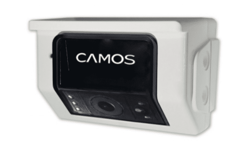
Rugged camera for harsh conditions
A camera mounted on a construction vehicle faces different conditions than one mounted on a delivery van. Dust, mud, vibrations, rain, and high-pressure cleaning place high demands on the housing and mounting.
For such applications, a camera with a high protection rating, such as IP69K, may be appropriate. This model is designed for conditions in which equipment is intensively exposed to water and dirt.
When designing a robust installation, Rietveld considers the following factors, among others:
- Water and dust resistance.
- Vibration-resistant mounting.
- Lens protection.
- Protected cable routes.
- Reliable connectors.
- Easy cleaning.
- Accessibility for maintenance.
- Resistance to temperature fluctuations.
A suitable camera therefore depends not only on the desired image quality, but also on the environment in which it must continue to function on a daily basis.
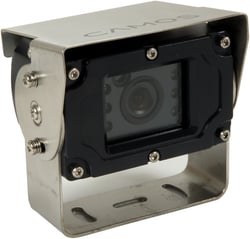
Good image quality in both light and dark conditions
A driver doesn’t always maneuver under ideal lighting conditions. A camera must also provide usable images in backlighting, in the dark, and at the transition between indoor and outdoor environments.
Dynamic range
At a distribution center, for example, a truck drives from bright daylight into a dark loading dock. A basic camera may adjust to the outdoor light, causing the interior to appear almost black.
A camera with a good dynamic range can better capture both bright and dark areas simultaneously. As a result, objects in different lighting zones remain more easily recognizable.
This is especially important for:
- Loading docks.
- Industrial buildings.
- Parking garages.
- Covered unloading areas.
- Tunnels and passageways.
- Bright sunlight or backlighting.
Infrared vision
For work in the dark, a camera with infrared support can be used. This allows the surroundings to remain recognizable even with little or no visible light.
Image quality depends on the camera, its placement, and the conditions. Dust, rain, reflective surfaces, and dirt on the lens can affect the night vision. Regular cleaning is therefore necessary.
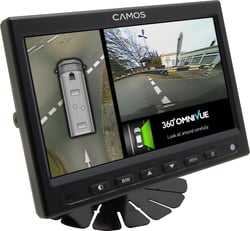
Which monitor should you choose?
The backup camera works in conjunction with a monitor in the cab. The screen must be clearly visible without unnecessarily obstructing the driver’s direct line of sight.
When choosing a monitor, these points are important:
- Screen size.
- The available space in the cab.
- The driver’s viewing distance.
- The number of camera inputs.
- Automatic activation when reversing.
- Ability to display multiple images simultaneously.
- Brightness in sunlight.
- Night mode or automatic dimming function.
- A sun visor, if available.
- Operation while wearing gloves.
- Compatibility with future upgrades.
If you currently need only one backup camera, a monitor with a single input may be sufficient. However, a monitor with multiple camera inputs may be a wise choice if you plan to add a side, front, or cargo area camera later on.
Automatic Switch to Rear View When Reversing
A practical camera system automatically switches to the rear view when the driver engages reverse gear. This eliminates the need for the driver to manually select a menu or camera channel first.
Depending on the vehicle and the application, the system can also be configured differently. For example, the image can remain visible at all times in vehicles where the rear window does not provide a clear view, or it can be manually activated during other tasks.
Proper switching prevents distractions and ensures that the relevant camera view is available the moment the driver needs it.
Wired or wireless camera system?
Rearview cameras are available as both wired and wireless solutions.
Wired backup camera
A wired connection typically provides a stable video feed and is suitable for vehicles that are used intensively. The wiring must be carefully concealed and protected from moisture, heat, sharp edges, and moving parts.
Wireless backup camera
A wireless solution can be practical when running cables is difficult or when vehicle combinations change frequently. However, performance depends on distance, vehicle design, interference, and the equipment selected.
Rietveld assesses which connection method is the most reliable and practical for each vehicle.
A single camera or a 360-degree view?
A backup camera primarily focuses on the area behind the vehicle. With complex vehicles, there may also be insufficient visibility on the right side, the front, or around moving parts.
In that case, a more comprehensive camera system may be a better fit, for example:
- A rearview and side camera.
- Multiple cameras around the vehicle.
- A 360-degree camera system.
- A camera system with person or object detection.
- A recording function for incident analysis.
- Video telematics with remote viewing.
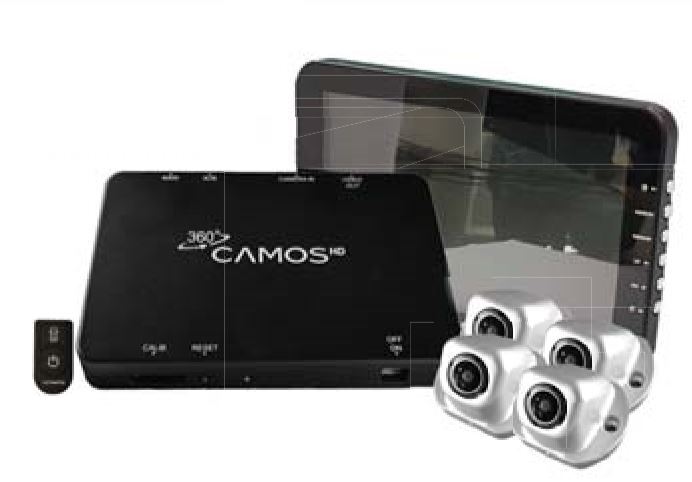
A 360-degree system combines footage from multiple cameras to provide a panoramic view around the vehicle. This can be valuable in busy areas, in city centers, and for vehicles with large or varying blind spots.
Rietveld therefore looks not only at where a camera can be mounted, but above all at which visibility issues actually need to be resolved.
Recording Footage and Assessing Claims
A simple backup camera displays a live feed but does not automatically save it. When footage is needed for incident analysis, claims processing, or training, a camera system with a recording function—known as video telematics—is essential.
Recorded footage can help assess retrospectively:
- What happened around the vehicle.
- Which road users were present.
- How a maneuver was performed.
- Whether a vehicle was involved in an incident.
- What circumstances may have contributed.
- Where instruction or process improvement is needed.
Privacy and data protection rules apply to the recording and processing of footage. The system must therefore be configured with a clear purpose, appropriate retention periods, and controlled access to footage.
Why Professional Installation Is Important
The performance of a camera system depends heavily on how it is installed. A high-quality camera offers little benefit if it is misaligned, quickly becomes dirty, or fails due to an unprotected cable.
Professional installation takes the following into account, among other things:
- The optimal camera and monitor positioning.
- A vibration-resistant mounting.
- Waterproof cable glands and seals.
- Protected cabling.
- Proper electrical connections.
- Prevention of cable breakage near moving parts.
- Automatic engagement with reverse gear.
- Adjustment of viewing angle and reference lines.
- Testing in light, dark, and various vehicle positions.
- Accessibility for cleaning and maintenance.
Before final installation, the system can be temporarily connected and tested. This allows any compatibility or connection issues to be identified before the camera, monitor, and cables are permanently installed.
.jpg?width=750&height=422&name=Monteur%20(7).jpg)
Have a rearview camera installed by Rietveld
A backup camera must be suited to the vehicle, the driver, and the daily work environment. That’s why Rietveld first assesses the risks and visibility requirements.
Our specialists consider, among other things:
- The type of vehicle or machine.
- The most critical blind spots.
- The conditions at work sites.
- The desired field of view.
- Lighting and weather conditions.
- The location of the camera and monitor.
- Possible future expansion.
- The need for recording, detection, or video telematics.
- Integration with warning signals or a backup alarm.
We then recommend a suitable camera, monitor, and mounting method. Our technicians handle the installation, calibration, testing, and training.
This way, you don’t just get a standalone camera, but a camera system that actually helps improve visibility and makes your work safer.
Maintenance of a backup camera
A backup camera requires relatively little maintenance, but it does need to be checked regularly.
Include the following in your daily or periodic vehicle inspection:
- Is the lens clean?
- Is the camera housing undamaged?
- Is the camera still at the correct angle?
- Is the image clear and stable?
- Does the automatic activation function work?
- Are the cables and connectors intact?
- Is the monitor easy to read?
- Are any infrared lights and heaters working?
- Are recorded images available when needed?
After a collision, repair, or modification to the vehicle body, it’s a good idea to recheck the camera alignment.
Better visibility around your vehicles and machinery
Would you like to have a backup camera installed or explore whether a more comprehensive camera system would better suit your situation? Rietveld assists you from consultation and selection to professional installation and support.
Together, we’ll assess your blind spots and working conditions and choose a solution that aligns with your vehicle, operations, and safety policies.
Have your vehicle or machine assessed and receive advice on the right camera, monitor, and mounting position.
Together, skilled, moving forward >
360-degree camera system: better all-around visibility around your vehicle
Installing the Piccolo Splitter Stand-Alone Air Conditioner: Compact Cab Cooling for Trucks