Vehicle Safety in Practice

Better visibility. Timely warnings. Safety technology tailored to your vehicle and work activities.

On a busy industrial site, when backing up, or while working along the roadside, a clear view isn’t always guaranteed. Drivers and operators have to deal with blind spots, moving people, obstacles, and changing work conditions.

With the right combination of camera systems, detection, alerts, and lighting, you can help your employees perform their work safely.

Rietveld helps you select, combine, and professionally install suitable vehicle safety solutions.

-> Request vehicle-specific safety advice

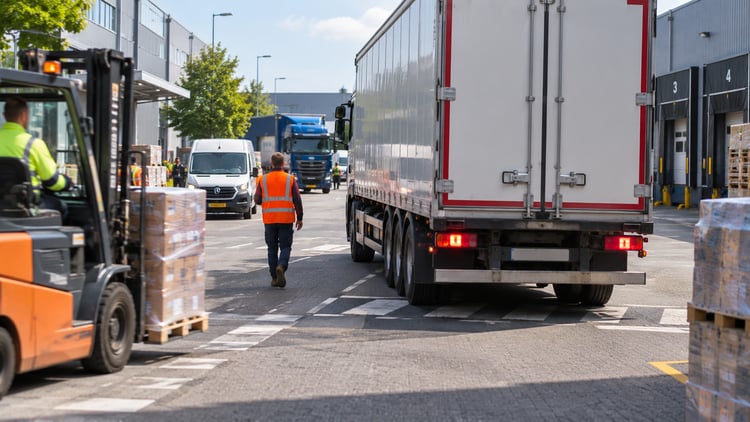
A busy loading area with trucks and forklifts

Where are the safety risks associated with your vehicles?

Every work situation presents different considerations.

  • Reversing and maneuvering: people and obstacles may be out of direct sight.
  • Blind spots: cyclists, pedestrians, and coworkers may not be clearly visible from every angle.
  • Working around heavy equipment: employees and machines move close to one another.
  • Poorly lit locations: Limited visibility makes it harder to assess the work environment.
  • Busy loading and unloading areas: constantly changing conditions demand the driver’s full attention.

The appropriate measures depend on the vehicle, the work being performed, and the surroundings.

Non-binding safety advice

From Better Visibility to Timely Alerts

1. Camera systems: a better view around the vehicle

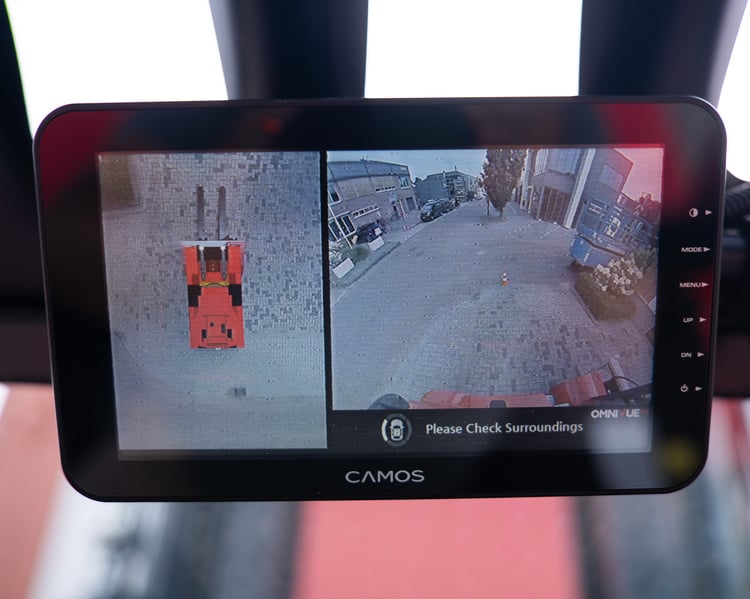
With EasyView camera systems, the driver or operator gains additional visibility of areas that are difficult to see from the cab.

A 360° camera system combines multiple camera feeds into a single, clear BirdView image. This assists the driver when backing up, turning, and maneuvering.

Depending on the application, individual cameras, automatically switching camera views, and video telematics are also available.
-> View EasyView camera systems

Easyview Forklift (3)

2. Detection Systems: Monitoring People and Obstacles

Good visibility is important. But during busy operations, a driver cannot constantly monitor every camera feed.

Depending on the configuration,EasyDetect can detect people and obstacles within preset detection zones and alert the driver.

The configuration is tailored to the relevant risk zones, the vehicle, and the work being performed.

-> View EasyDetect detection systems

A busy loading area with trucks and forklifts

3. Warning Systems: Communicate Risks

It’s not just the driver who needs information. Employees and bystanders must also be able to recognize when a vehicle is moving or performing work.

With EasyAlarms reverse alarms and appropriate signaling systems, people in the vicinity can be warned.

A backup alarm sounds when reversing, but it does not detect people or obstacles on its own. Therefore, combining it with active detection may be advisable.

-> View the warning systems
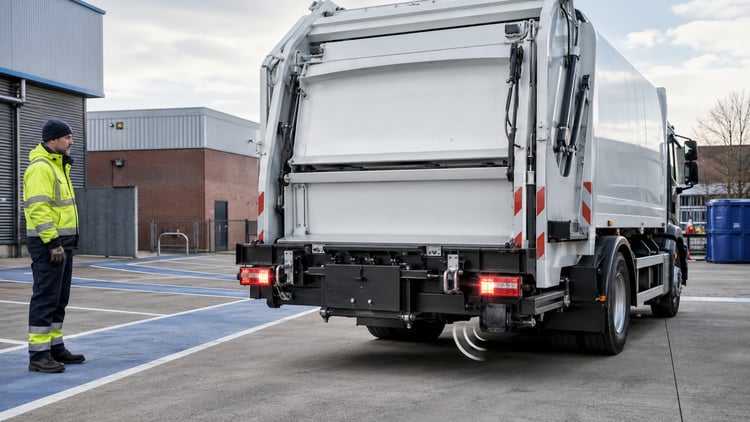
Reverse Parking Alarm

4. Work and Signal Lighting: See Better and Be More Visible

Lighting plays a crucial role when working in the dark, on construction sites, or in industrial areas.

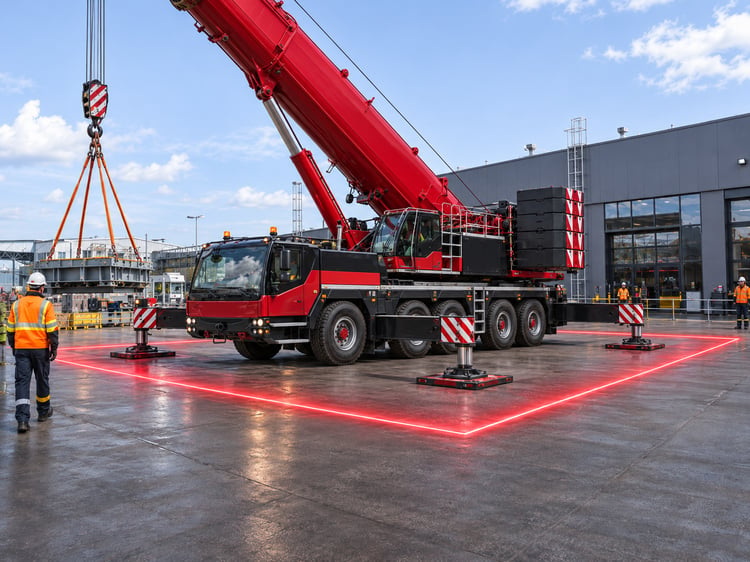
With EasyLights, Rietveld offers, among other things, LED work lights, rotating and flashing lights, and RedLine projection lighting.

RedLine projects a visible line onto the ground to alert bystanders to a hazard zone. The system serves as a supplementary warning; it is not a people-detection system.
-> View work and warning lights

Mammoet crane in the marked lifting zone

5. Automatic braking: additional support where possible

In specific applications ,detection can be combined with EasyBrake, a system that can automatically intervene under certain conditions when a risk is detected.

Whether this solution is suitable depends, among other things, on the vehicle, the braking technology, the configuration, and the operating environment.

-> Discover EasyBrake
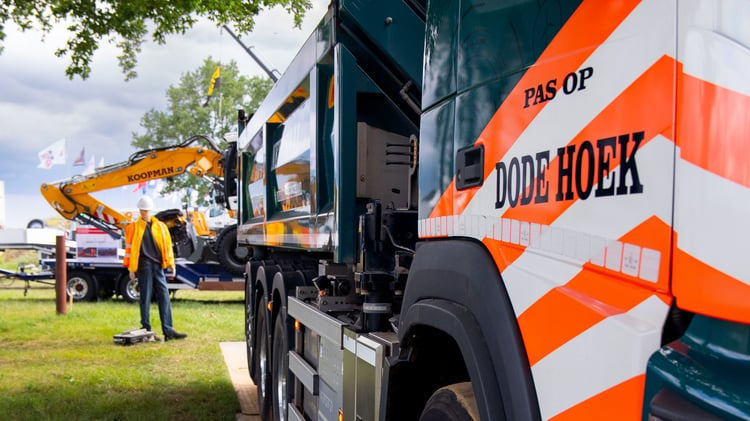
Easybrake Smart Brake Assist

Which combination is right for your fleet?

A distribution truck that drives through city centers every day has different considerations than a garbage truck in a residential neighborhood or a front-end loader on a construction site.

That’s why Rietveld doesn’t start with a standard package, but with your specific situation.

Among other things, we look at:

  • The vehicle type, dimensions, and body configuration.
  • The locations and conditions in which your employees work.
  • The most critical blind spots and risk zones.
  • The need for camera views, detection, and alerts.
  • The technical capabilities for installation and integration.
  • Ease of use for drivers and operators.

From consultation to professional installation

Assessment
We discuss the vehicles, work environment, and key safety issues.

Vehicle-specific/fleet advice
We recommend which individual systems or combinations are suitable for your application.

Installation and Calibration
Our technicians handle the installation, configuration, and testing of the selected systems.

Explanation and Support
We provide explanations of how the systems work and key points to consider during use. Even after installation, you can contact Rietveld for support.

Discuss safety around your vehicles

Would you like to improve visibility in blind spots? Explore which detection or warning systems are best suited to your operations? Or see how you can upgrade existing vehicles with additional safety technology?

Rietveld’s specialists are happy to work with you to find the right solution.

Together, we’ll determine which solution best fits your vehicles, employees, and daily operations.

-> Request a no-obligation safety consultation.

Rietveld—Together, expert, moving forward.

Frequently Asked Questions About Vehicle Safety

Is a 360° camera system the same as a detection system?

No. A camera system provides the driver with additional visibility. A detection system can recognize people or obstacles within preset zones and issue a warning. Some solutions combine both functions.

Can cameras, detection, and alerts be combined?

Yes, different systems can complement each other. We evaluate which combinations are technically and practically suitable on a case-by-case basis for each vehicle and application.

Can safety technology also be retrofitted?

Retrofitting is possible for many existing commercial vehicles and machines. The technical capabilities vary depending on the vehicle, body type, and selected system.

Does safety technology replace the driver's responsibility?

No. Cameras, detection systems, and alerts support the driver, but they do not replace safe driving practices, clear work procedures, or other necessary safety measures.

What is Rietveld's track record in the field of vehicle safety?

Various renowned companies rely on Rietveld’s vehicle safety solutions. Some well-known references include:

  • Albert Heijn: All delivery vans are equipped with a 360° camera system for optimal visibility around the vehicle.
  • Mammoet: Cranes equipped with red lines, camera systems, and detection systems to enhance safety during operations.
  • Dura Vermeer: Use of automatic braking systems to improve safety on construction sites.
  • BAM: Use of automatic braking systems to reduce the risk of collisions.

These references illustrate Rietveld’s broad expertise in the field of vehicle safety, ranging from camera systems and detection technology to active safety systems that help prevent accidents.

-> Read more about some customer case studies https://rietveld.nl/case-studies

Back to top