By Pleun Rietveld on 28 Aug 2026, 17:22:22
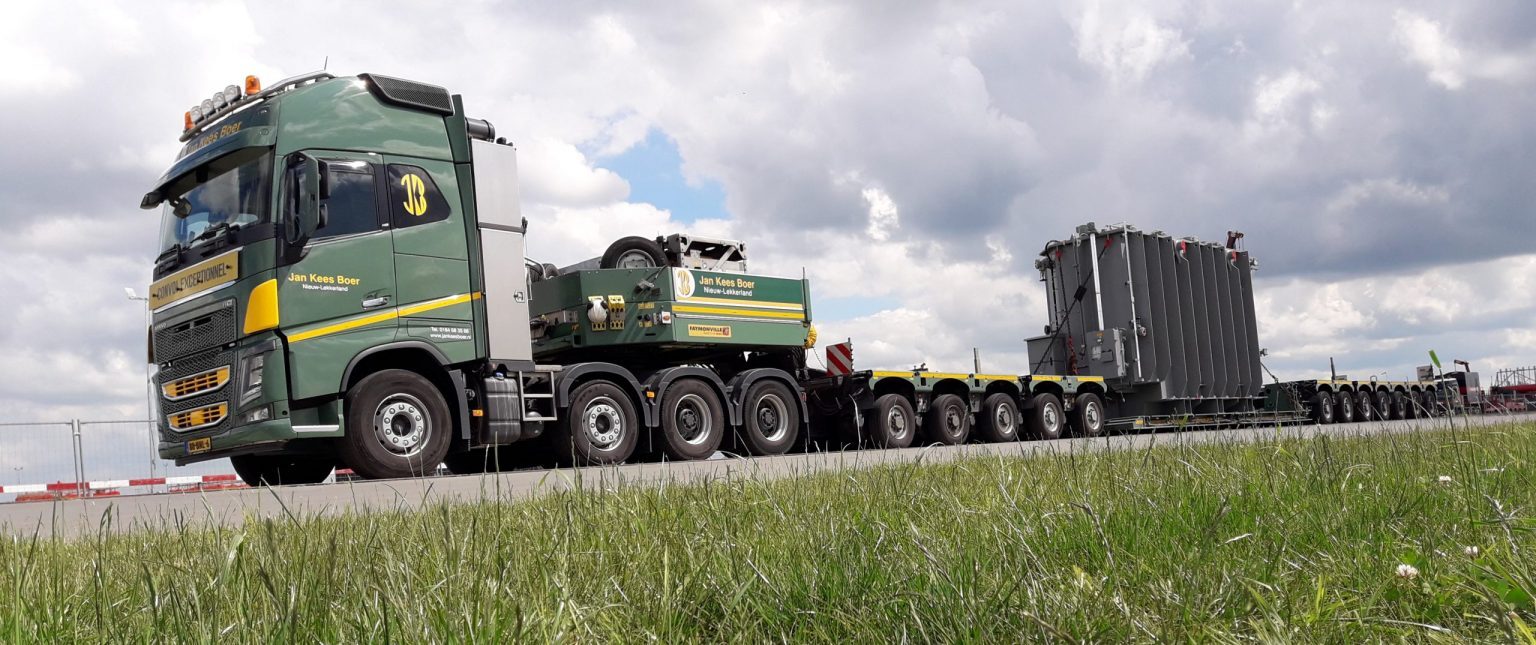
Due to its size, a truck, construction machine, or waste collection vehicle has several blind spots that the driver cannot see directly. Mirrors and individual cameras help, but each provides a view from only one direction. This makes it difficult to keep track of all people, vehicles, and objects around the vehicle at the same time while maneuvering.
A 360-degree camera system combines the images from multiple cameras into a single, clear bird’s-eye view. The driver can see on a monitor what is in front of, behind, and on both sides of the vehicle. This reduces blind spots and supports safer maneuvering in busy industrial areas, construction sites, residential neighborhoods, and other complex work environments.
The quality of the final image is not determined by the cameras alone. The mounting position, calibration, vehicle dimensions, monitor, and daily operations are also important. A 360-degree camera system must therefore always be carefully tailored to the vehicle.
What is a 360-degree camera system?
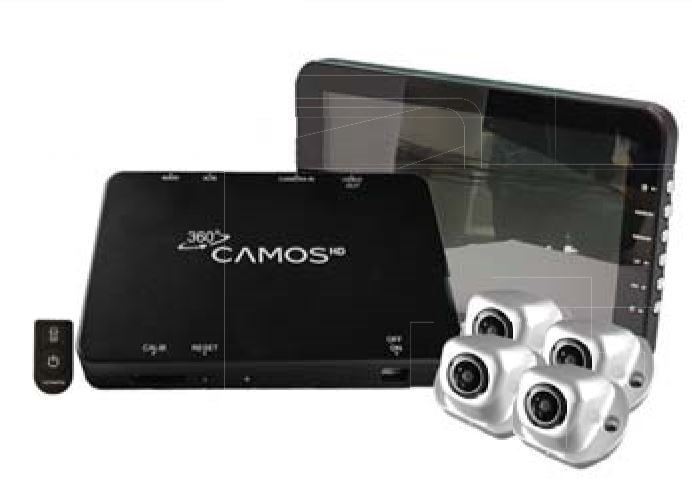
A 360-degree camera system typically consists of four wide-angle cameras:
- One camera at the front.
- One camera at the rear.
- One camera on the left side.
- One camera on the right side.
A central control unit, also known as an ECU, processes the individual camera images and combines them in real time. This creates a bird’s-eye view on the monitor in the cab: the vehicle appears to be viewed from above, with its immediate surroundings displayed around it.
Depending on the selected configuration, the monitor can display a separate camera image in addition to the top-down view. For example, when the turn signal is activated, the relevant side view appears automatically. When reversing, the image from the backup camera can be displayed larger.
This gives the driver both an overview and extra detail when needed.
How does 360-degree BirdView work?
Each of the four cameras has a wide field of view and captures a portion of the surroundings. These images partially overlap. The ECU corrects the field of view and combines the images into a single continuous overview.
To do this, the system must be precisely calibrated after installation. During this calibration, the following data, among other things, is processed:
- The length and width of the vehicle.
- The position and height of the cameras.
- The field of view of each camera.
- The overlap between the images.
- The relevant field of view around the vehicle.
Proper calibration is essential. If cameras are not positioned correctly or the images do not align properly, objects may appear distorted or in the wrong position.
A professionally installed and calibrated system provides the driver with a coherent view that allows for better assessment of distances and movements around the vehicle.
Why choose a surround-view system?
A standalone backup camera only shows the area behind the vehicle. A side camera provides a view along one side. However, with large or complex vehicles, blind spots can occur in multiple places at once.
Consider, for example:
- The space directly in front of the cab.
- The right side of the vehicle.
- The area behind the vehicle.
- The corners around a body, container, or superstructure.
- The area next to rotating or moving vehicle parts.
- People approaching from different directions while the vehicle is maneuvering.
With a combined top-down view, the driver doesn’t have to switch between different camera feeds as often. The entire immediate surroundings remain clearly visible on a single monitor.
The camera system does not replace mirrors, direct visibility, or safe operating procedures. It is a supplementary tool that helps the driver better assess the surroundings.
What are the advantages of a 360-degree camera system?
Better visibility of blind spots
The combined camera images reveal areas that are difficult to see from the cab or via the mirrors. This makes it easier to spot cyclists, pedestrians, fellow workers, and low obstacles in particular.
Safer maneuvering
When reversing, turning, parking, or approaching a loading dock, the driver can see the immediate surroundings from multiple angles. This supports a controlled execution of the maneuver.
Reduced risk of damage
Poles, walls, parked vehicles, stored goods, and other obstacles can quickly fall out of direct view. A 360-degree view helps identify these sooner and can help minimize damage and unplanned downtime.
Better visibility in busy locations
On a construction site, company grounds, or in a residential area, people and vehicles are constantly changing positions. The bird’s-eye view provides the driver with a single, up-to-date overview of the immediate surroundings.
Less strain on the driver
Constantly switching between mirrors, separate camera feeds, and direct vision demands a great deal of attention. A cohesive view can provide greater peace of mind and a clearer overview during complex maneuvers.
Support for safety policies
A 360-degree camera system can be part of a broader safety policy covering vehicles, machinery, and mobile work equipment. The solution can be combined with instructions, a backup alarm, detection systems, or additional warning signals.
For which vehicles is a 360-degree camera suitable?
A 360-degree camera system can be installed on a wide range of commercial vehicles and machinery. The design and installation vary depending on the vehicle type and work environment.
Rietveld supplies and installs systems for, among others:
- Trucks and box trucks.
- Tractors and semi-trailers.
- Dump trucks.
- Concrete mixers.
- Waste collection vehicles.
- Municipal vehicles.
- Construction and utility vehicles.
- Mobile cranes.
- Earthmoving equipment.
- Shovels and wheel loaders.
- Rollers and street sweepers.
- Agricultural machinery.
- Delivery vans.
- Tour buses.
- Forklifts and other material handling equipment.
- Special-purpose vehicles and machinery.
On a box truck, the cameras can be mounted in fixed positions. A vehicle with swap bodies, moving machine parts, or different trailers requires a different configuration.
That is why we assess the entire vehicle configuration in advance, not just the cab or body.
In what situations does a 360-degree view offer added value?
All-around visibility is particularly valuable when vehicles regularly operate in locations where space is limited or where people move close to the vehicles.
For example:
- Maneuvering on a construction site.
- Waste collection in residential neighborhoods.
- Backing up at a loading or unloading site.
- Turning on a narrow street.
- Working in urban areas with cyclists and pedestrians.
- Driving on busy industrial sites.
- Parking between vehicles, machinery, or obstacles.
- Work involving roads and infrastructure.
- Operating machinery with a tall or wide superstructure.
- Situations in which the vehicle configuration changes frequently.
Which fields of view are most important depends on the type of work being performed. For a garbage truck, the focus may be on the sides and rear. For a mobile crane, on the other hand, the areas around moving parts may require extra attention.
Where are the cameras mounted?
The position of each camera determines which part of the surroundings is visible and how well the images can be stitched together.
During installation, the following factors are taken into account, among others:
- The length, width, and height of the vehicle.
- The shape of the cab and body.
- The desired field of view around the vehicle.
- The presence of doors, hatches, and containers.
- Moving or extending parts.
- Potential contamination from mud, dust, or splashing water.
- Protection against branches, cargo, and other obstacles.
- Accessibility for cleaning and maintenance.
- The routing of cables and connectors.
- The overlap between the individual camera images.
The cameras are positioned so that together they capture the relevant surroundings around the vehicle. After installation, the system is calibrated based on the exact vehicle dimensions and camera positions.
HD video and rugged cameras
A camera system on a commercial vehicle must continue to function daily under varying conditions. Rain, dust, mud, vibrations, temperature fluctuations, and intensive cleaning place high demands on the components.
Rietveld uses rugged camera systems that, depending on the selected configuration, may feature:
- HD wide-angle cameras.
- Fields of view up to approximately 180 degrees.
- IP69K-rated camera housings.
- Vibration-resistant mounting.
- Protected cable connections.
- Real-time image processing.
- A 7- or 10-inch monitor.
- Automatic image switching.
- Options for local image storage.
The required features vary by application. A camera system for a delivery van is exposed to different conditions than a system on a garbage truck, concrete mixer, or earth-moving machine.
Good visibility in both light and dark
Vehicles are not only used in bright daylight. A driver may drive from bright sunlight into a dark industrial building or maneuver in the evening on a poorly lit site.
When selecting cameras, the following factors are therefore also considered:
- Light sensitivity.
- Dynamic range.
- Backlight performance.
- Performance in the dark.
- Reflections from lighting.
- Lens smudges.
- Automatic monitor brightness control.
Even a high-quality camera produces less usable images when the lens is covered with dirt, snow, or water. Regular inspection and cleaning therefore remain essential.
Which monitor is compatible with the system?
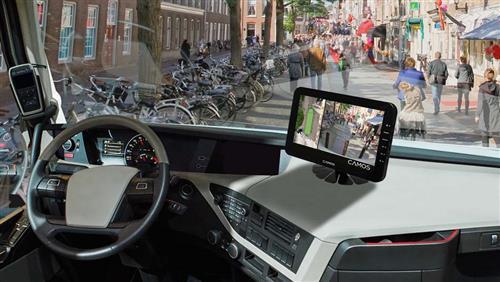
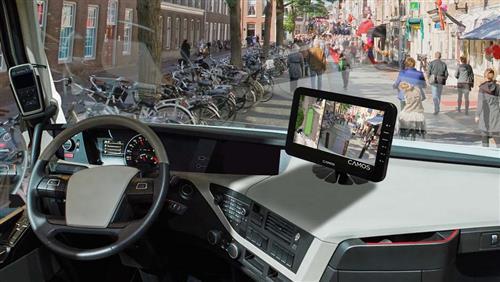
The monitor displays the composite top view and, if applicable, an additional camera image. The screen must be clearly visible to the driver without unnecessarily obstructing the direct view outside.
When selecting and positioning the monitor, the following factors should be considered:
- The available space in the cab.
- The driver’s viewing distance.
- A screen size of, for example, 7 or 10 inches.
- The desired display layout.
- Automatic switching when signaling a turn.
- Automatic display while reversing.
- Brightness in sunlight.
- A night mode or dimming function.
- Easy operation.
- Potential future expansion.
The appropriate display layout depends on the situation. During normal maneuvering, the full bird’s-eye view can be centered on the screen. When reversing, a larger rear view can also appear, allowing the driver to maintain both an overview and a detailed view.
Standard BirdView or a 3D system?
Rietveld offers various models for all-around visibility.
Standard 360-degree BirdView
The standard version combines the images from four HD cameras into a single, clear top-down view. The driver sees the vehicle and its immediate surroundings from a bird’s-eye view.
This version is suitable for vehicles where a clear overview is particularly important during maneuvers.
360-Degree 3D View
In addition to the top-down view, a 3D system can display various spatial perspectives. This allows the surroundings to be viewed from multiple virtual angles.
This can provide additional support for:
- Maneuvering in very tight spaces.
- Vehicles with complex configurations.
- Work involving multiple moving objects.
- Situations where greater depth and a spatial overview are desired.
Depending on the configuration, a 3D system may come standard with a local recorder and can be expanded with additional cameras or detection components.
Which configuration is best suited depends on the vehicle, the risks, and the desired functions.
Automatic switching during maneuvers
A practical camera system automatically displays the most relevant view.
When the driver activates the right turn signal, the view on the right side can be displayed larger. When reverse gear is engaged, the rear view can appear automatically.
This eliminates the need for the driver to manually select a camera channel during every maneuver. The composite overview can remain visible at the same time, allowing the driver to monitor the situation around the entire vehicle.
The exact switching sequence is tailored to the vehicle and the work being performed.
Recording Footage for Incident Analysis
Depending on the model, a 360-degree camera system can be equipped with a recorder. The camera footage is then stored locally in the vehicle.
Recorded footage can help assess:
- Collisions and damage.
- Unsafe situations.
- Differences in interpretation of an incident.
- The position of people or vehicles.
- The execution of a maneuver.
- Opportunities for additional instruction.
- Recurring risks at work sites.
Privacy and data protection rules apply to the recording, storage, and viewing of camera footage. The organization must therefore establish a clear purpose, an appropriate retention period, and controlled access.
If footage also needs to be accessible remotely, a solution using video telematics may be more suitable.
Why professional installation is important
With a 360-degree camera system, four camera images must align precisely with one another, both technically and visually. Simply purchasing high-quality cameras is therefore not enough.
A professional installation takes into account, among other things:
- The optimal position of each camera.
- A vibration-resistant mounting.
- Watertight cable glands and seals.
- Protected cable routes.
- Proper electrical connections.
- Distance from heat sources and moving parts.
- The monitor's position.
- Automatic synchronization with vehicle signals.
- Correct entry of vehicle dimensions.
- Calibration of the individual images.
- Checking the transition between camera views.
- Testing under various conditions.
A misaligned or displaced camera can distort the composite view. That is why the entire system is checked and adjusted after installation.
Can a 360-degree camera be retrofitted?
Yes, a 360-degree camera system can be retrofitted to many existing vehicles and machines. This is also known as a retrofit.
Prior to installation, Rietveld assesses, among other things:
- Whether suitable mounting positions are available.
- How the cabling can be routed.
- Where the ECU and monitor can be placed.
- Which vehicle signals are available.
- Whether moving body parts affect visibility.
- Which model is suitable for the vehicle.
- Whether an expansion with recording or detection is desired.
Even with new vehicles, it’s wise to coordinate the installation early on. That way, camera positions, cabling, and the monitor can be taken into account during assembly and delivery.
Maintenance and Daily Checks
A 360-degree camera system requires relatively little maintenance, but its operation must be checked regularly.
Include the following in your daily or periodic vehicle inspection:
- Are all camera lenses clean?
- Are the housings undamaged?
- Are the cameras still in the correct position?
- Do the images align properly?
- Is the image clear and stable?
- Does the automatic image switching work?
- Is the monitor easy to read?
- Are the cables and connectors intact?
- Is the recorder (if any) working?
- Are recorded images available when needed?
Have the system rechecked after a collision, repair, bodywork modification, or relocation of a camera. Even a small change in position can affect the composite bird’s-eye view.
Have a 360-degree camera system installed by Rietveld
A good camera system starts with mapping out the actual blind spots and daily operations.
Rietveld’s specialists consider factors such as:
- The type of vehicle or machine.
- The dimensions and configuration.
- The main visibility issues.
- The daily work environment.
- The position of vulnerable road users and coworkers.
- The desired image quality.
- The placement of cameras and monitors.
- The need for local image storage.
- Possible expansion with detection or video telematics.
- Integration with warning signals or a backup alarm.
We then recommend a suitable solution. Our technicians handle the installation, cabling, connection, calibration, testing, and user training.
This way, you won’t end up with a collection of individual cameras, but rather a carefully coordinated system that helps the driver better monitor the vehicle’s immediate surroundings.
Better visibility around your vehicles and machinery
Do you want to reduce blind spots around your truck, construction machine, or specialty vehicle? Rietveld assists you from initial assessment and consultation through professional installation, calibration, and support.
Together, we’ll determine which visibility zones are important and whether a standard BirdView system, a 3D version, or a combination with detection and video telematics best suits your situation.
Do you want better all-around visibility around your vehicles?
Have your truck, machine, or specialty vehicle assessed and receive advice on the right cameras, monitor, and system configuration.
Blind spots in built-up areas: a better 360° view | Rietveld
EasyTrack with EasyDrive: From Vehicle Data to Better Driving Behavior