
By Pleun Rietveld on 31 Aug 2026, 15:45:08
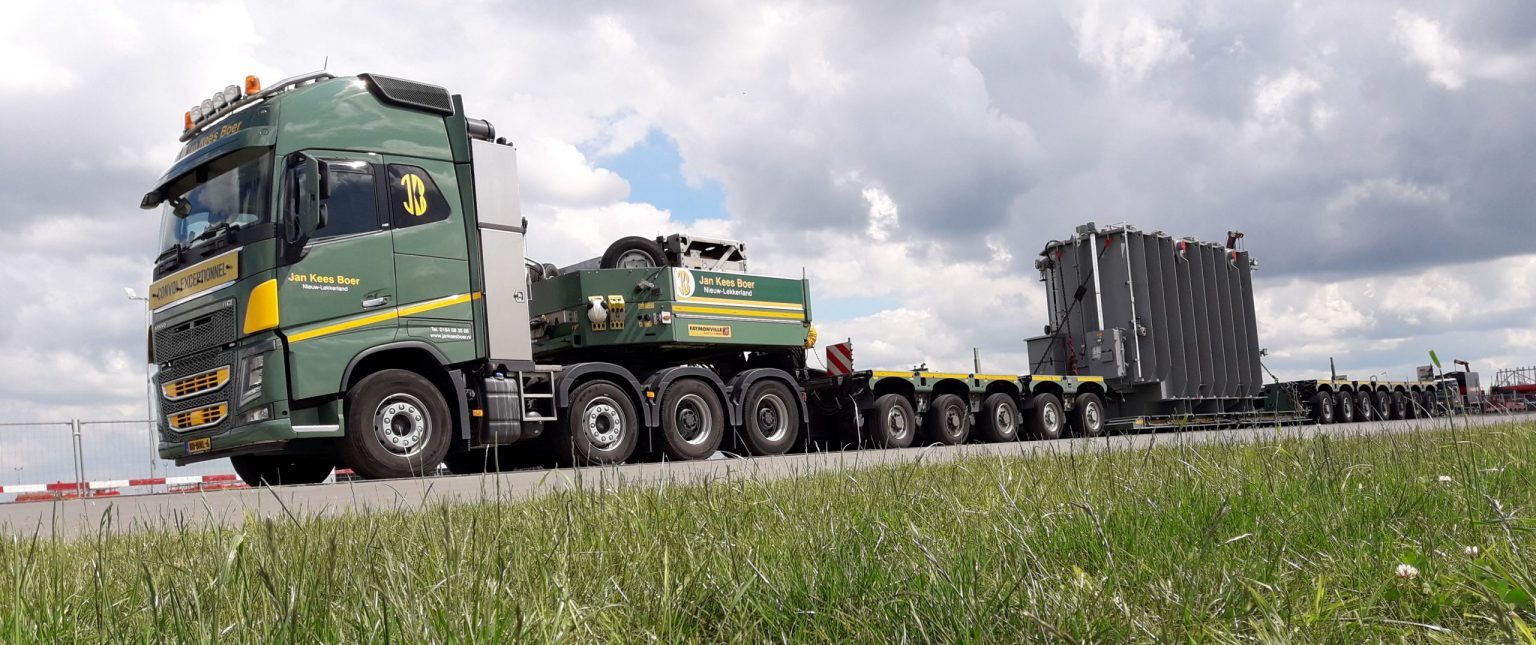
Better visibility during special transport with a wireless camera system
For special and heavy-haul transport, good visibility behind the trailer is essential. The length of the combination, non-standard vehicle dimensions, and limited maneuvering space make backing up, coupling, and positioning particularly challenging. Especially when tractors and trailers are frequently swapped, a traditional camera system does not always prove reliable in practice.
With the Camos CM-5050, the driver has a camera view behind the trailer without the need for a vulnerable connection cable between the tractor and the trailer. Thanks to automatic pairing, the camera automatically connects to the monitor in the cab with every new combination.
Why is good visibility so important for special transport?
Drivers of tractor-trailer combinations must frequently maneuver in locations with limited space. Think of construction sites, industrial parks, loading and unloading areas, work sites, and warehouses. People, vehicles, materials, and other obstacles may be located behind or next to the combination.
Mirrors do not always provide a full view of the area directly behind the trailer. Furthermore, the distance between the driver and the rear of the combination makes it difficult to accurately judge distances.
A backup camera helps the driver with, among other things:
- reversing and positioning;
- approaching a loading or unloading area;
- maneuvering in tight spaces;
- checking the space behind the trailer;
- preventing damage to vehicles, equipment, and infrastructure;
- protecting employees and bystanders.
The camera system is a supplementary safety feature. The driver remains responsible for the maneuver but has more information available to make a safe decision.
The problem with traditional camera systems
In a traditional camera system, the camera mounted on the rear of the trailer is connected via a cable to the monitor in the cab. This solution works well as long as the tractor and trailer form a fixed combination.
However, in transport environments where tractors and trailers are regularly swapped, the connecting cable poses practical problems. The cable must be disconnected and reconnected with every swap.
This can lead to the following situations:
- the driver forgets to connect the cable;
- the cable gets caught on the tractor or trailer;
- the connection gets damaged;
- the cable is pulled loose when the tractor drives away;
- a driver hooks up a trailer that doesn’t have a suitable cable;
- the camera system fails due to wear and tear or a faulty connection.
As a result, although a backup camera is present, the driver does not receive an image on the monitor. Precisely when extra visibility is needed, the system cannot be used.
Wireless Camera Feed with the Camos CM-5050
The Camos CM-5050 transmits the camera image wirelessly from the trailer to the monitor in the cab.
The system consists of:
- a camera mounted at the rear of the trailer;
- a transmitter unit on the trailer;
- a receiver unit in the tractor;
- a monitor in the cab.
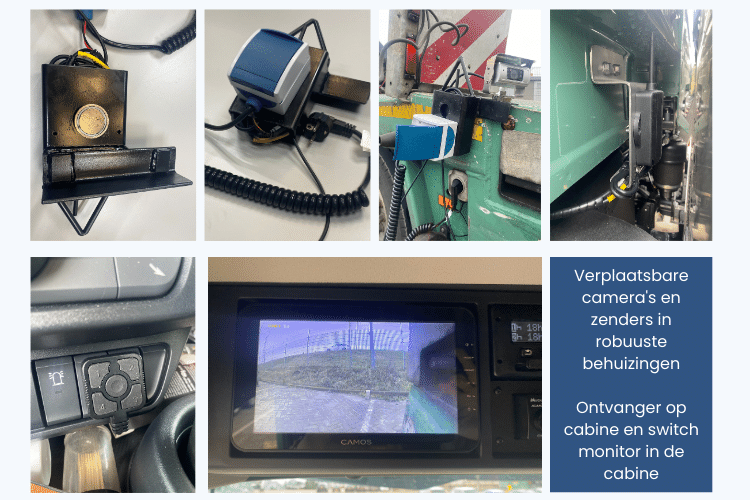
The transmitter sends the camera image wirelessly to the receiver. This eliminates the need for a separate video cable between the tractor and the trailer.
As soon as the electrical connection between the tractor and the trailer is established, the camera system automatically connects. The driver does not need to select a camera, enter a code, or perform any other additional steps.
How automatic pairing works in practice
Automatic pairing prevents the driver from having to manually pair a camera with the monitor every time the trailer is changed.
Step 1: Reversing Safely
The driver reverses the truck-trailer combination toward a dock, loading area, or work zone. Using the camera mounted on the rear of the trailer, the driver can see the area directly behind the combination.
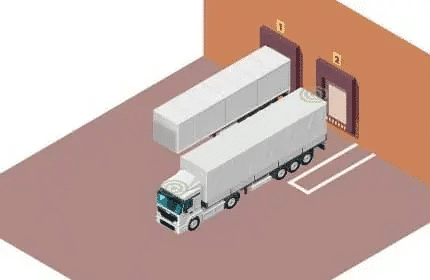
Step 2: Unhitch the trailer
When the trailer is uncoupled, the connection between the camera and the monitor is automatically断开. There is no need to disconnect a separate camera cable.
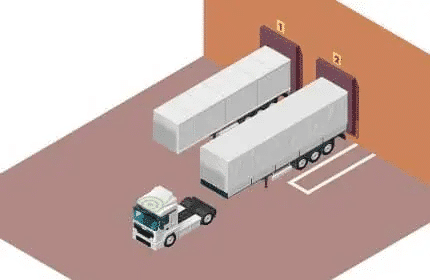
Step 3: Coupling another trailer
The tractor is coupled to another trailer that is also equipped with a transmitter and a backup camera.
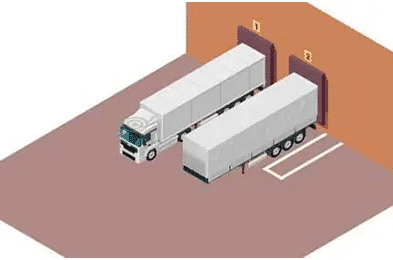
Step 4: Establishing an automatic connection
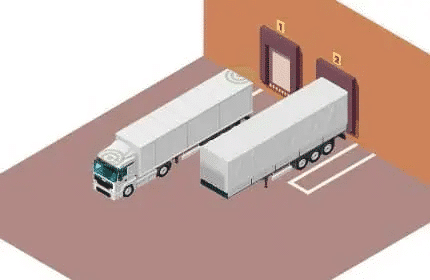
As soon as the power connection between the tractor and the trailer is active, the receiver detects the transmitter from the new trailer. The monitor automatically connects to the correct camera.
The driver can then immediately view the rear view without first having to configure the camera system.
Suitable for fleets with varying combinations
The Camos system is particularly useful for organizations where tractors and trailers are not used as fixed combinations. Within a single fleet, multiple equipped trailers can be coupled to different tractors.
This makes the solution suitable for, among other things:
- specialized and heavy-haul transport;
- transportation companies with a large trailer fleet;
- distribution transport;
- construction and infrastructure transport;
- waste and recycling transport;
- container transport;
- logistics companies with frequent trailer changes;
- transport to loading docks and industrial sites.
The system can be linked to an unlimited number of equipped cameras. As a result, each tractor does not need to remain permanently connected to a single specific trailer.
Greater safety and a lower risk of damage
The added value of the wireless camera system lies not only in the absence of a connecting cable. Above all, the system ensures that camera footage remains available in day-to-day operations.
The benefits are:
- better visibility directly behind the trailer;
- automatic connection when switching trailers;
- no vulnerable camera cable between the tractor and the trailer;
- reduced risk of cable breaks and faulty connections;
- no extra steps required for the driver;
- Wide applicability within a fleet;
- assistance during reversing and maneuvering;
- reduced risk of collisions and property damage.
By automating the operation, the safety feature becomes less reliant on manual actions. This makes the system easier for drivers to use and more reliable in daily operations.
A camera system tailored to the vehicle
A good camera system involves more than just selecting a camera and monitor. The right solution depends on the length and configuration of the combination, the nature of the work, trailer changes, and the environment in which the vehicle is maneuvered.
Rietveld therefore assesses, among other things:
- which tractors and trailers are used;
- how often trailer combinations are changed;
- where the camera can best be mounted;
- which monitor and image quality are desired;
- which areas around the vehicle need to be more clearly visible;
- whether multiple cameras are needed;
- how the system can be installed on existing vehicles.
The wireless backup system can be combined with side cameras, front cameras, 360° bird’s-eye view, or AI detection as needed. This creates a vehicle-specific solution tailored to real-world risks.
Camos: Reliable Cameras for Vehicles and Machinery
Camos has been developing cameras, monitors, and wireless camera systems for vehicles since 1994. The product range includes rearview cameras, infrared cameras, monitors, and accessories for various transportation and machinery applications.
Rietveld is the exclusive dealer for Camos in the Netherlands. At EasyView, we combine this camera technology with our expertise in vehicles, machinery, and complex fleets.
As a result, development, consulting, planning, installation, and support are all handled by a single specialist. This is particularly important for fleets with a variety of tractors, trailers, and vehicle configurations.
Always a clear view of the right semi-trailer
A backup camera only adds value if the driver actually receives the video feed. With frequently changing tractors and semi-trailers, a conventional cable connection can be a weak link.
The Camos CM-5050 eliminates this manual and failure-prone step. The camera and monitor automatically connect as soon as a new combination is formed. This ensures the driver has a view behind the correct semi-trailer without any additional steps.
Would you like to know if a wireless camera system is suitable for your tractor-trailer combinations? Our safety specialists will assess your vehicles, trailer changes, and work environment and recommend a suitable camera solution.
Request advice or a demonstration of the Camos CM-5050.
Together, Skilled, Moving forward >
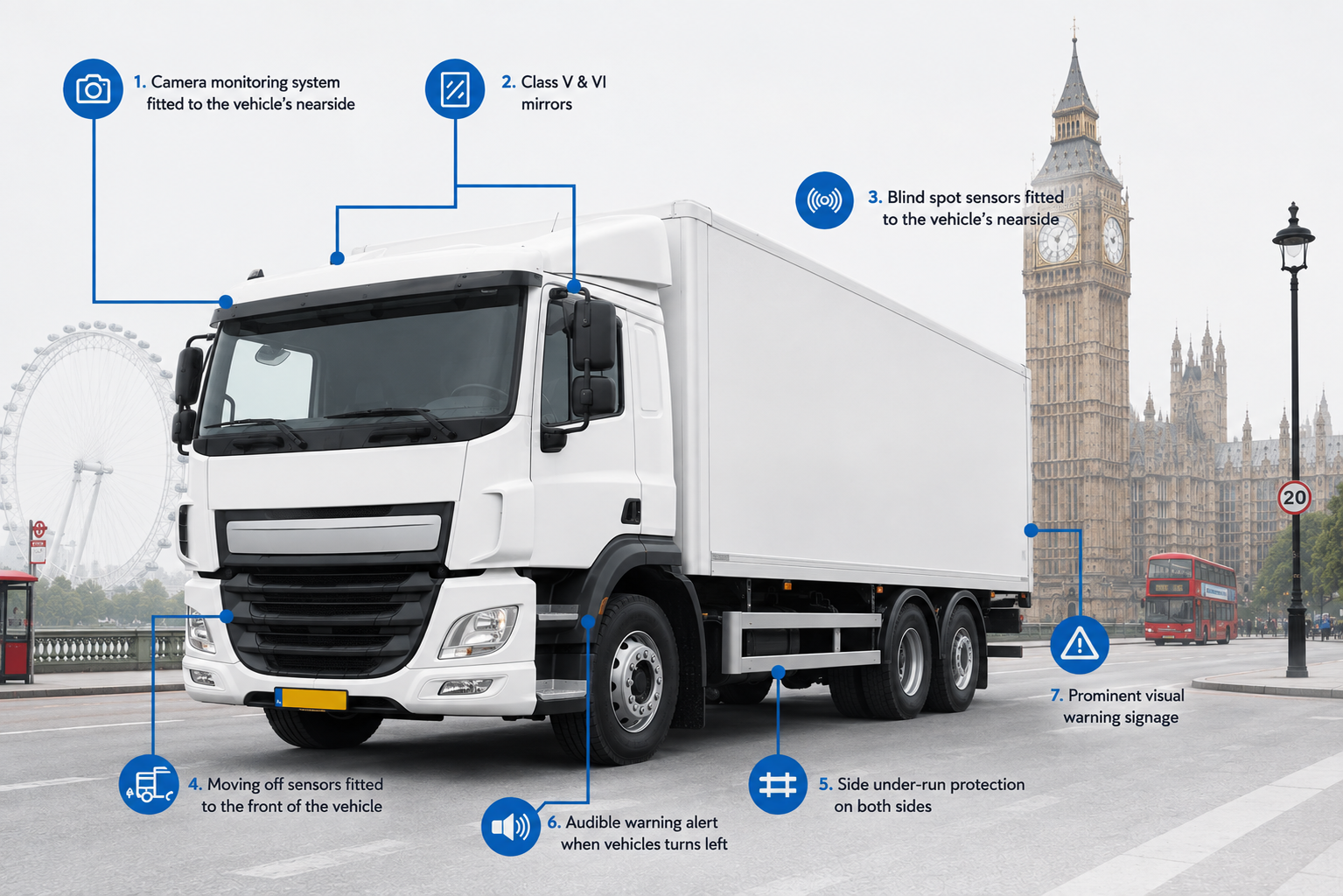
Progressive Safe System: Travel Safely and in Compliance with Your Truck Through London
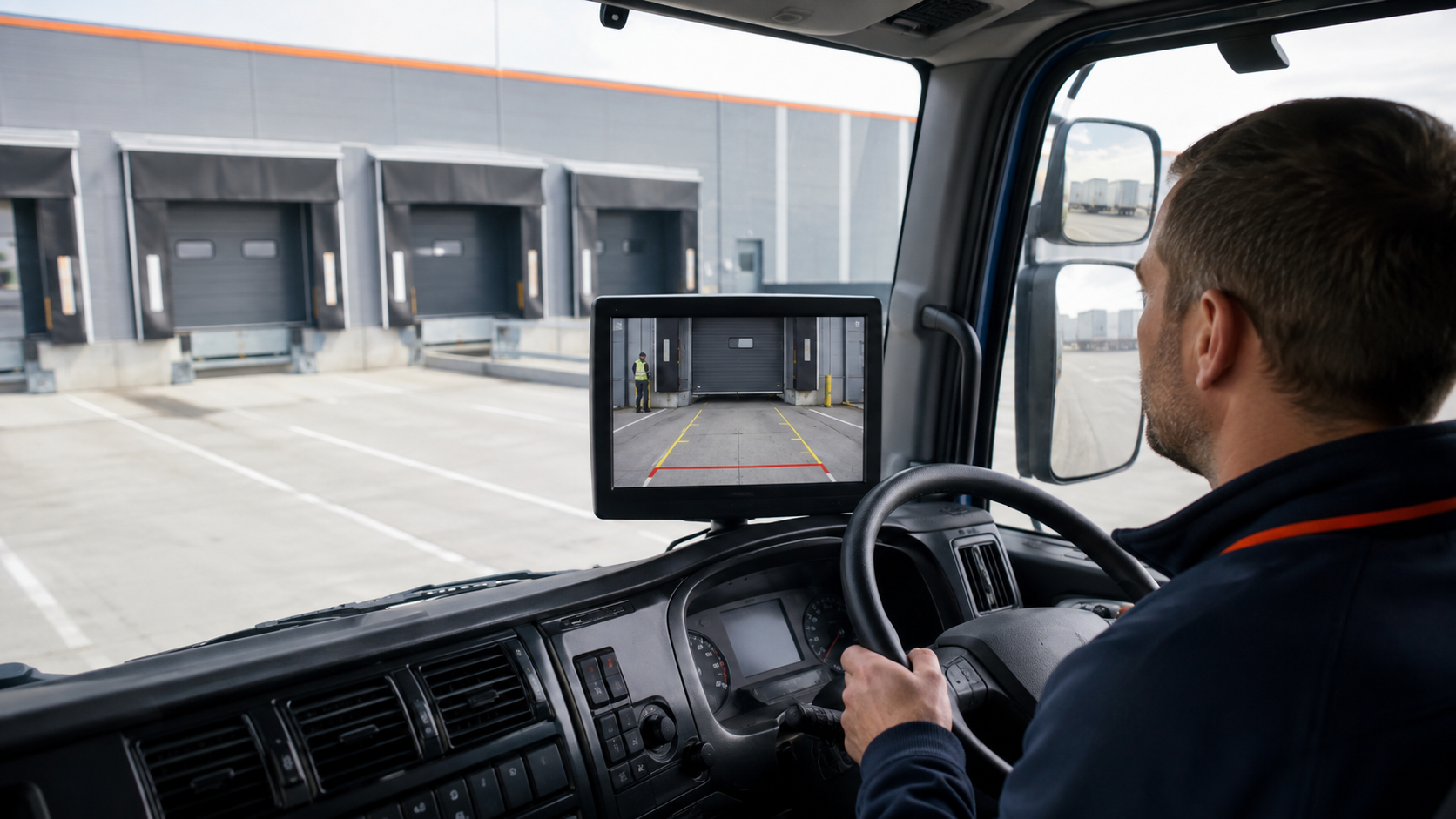
Installing a Rearview Camera for Safe Maneuvering [EN]