
By Pleun Rietveld on 31 Aug 2026, 10:53:07
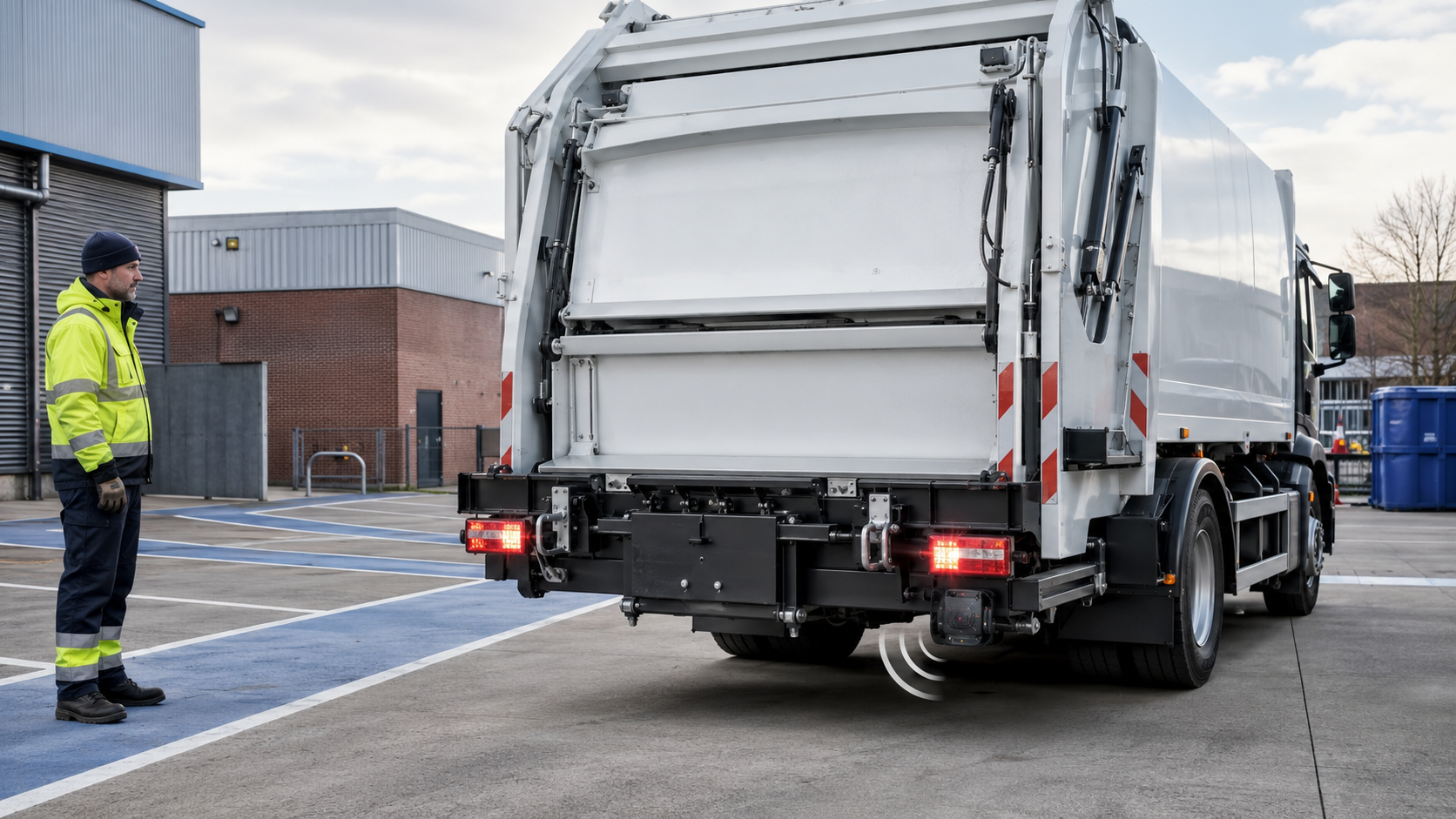
Is a backup alarm required?
Almost everyone recognizes the familiar beeping sound of a truck, forklift, or construction vehicle backing up. It warns people in the vicinity that a vehicle is backing up and that they may be in the danger zone.
Since so many vehicles are equipped with a backup alarm, it seems logical that such an alarm would always be required by law. However, the situation is more nuanced. There is no general vehicle regulation in the Netherlands that stipulates that every vehicle must have a reverse alarm as standard equipment. However, based on occupational safety regulations, a risk assessment, client requirements, or the work site, an appropriate warning system may be necessary or mandatory.
Why is reversing so risky?
With trucks and machinery, direct rear visibility is limited. Mirrors and cameras assist the driver or operator, but people and low obstacles can still unexpectedly be in the path of the vehicle.
The risk is particularly high at locations where vehicles and people work in close proximity, such as:
- construction sites;
- distribution centers;
- warehouses and industrial facilities;
- waste and recycling facilities;
- municipal depots;
- loading and unloading areas;
- agricultural operations;
- port and transshipment areas;
- locations in residential areas.
The backup alarm is primarily intended for people outside the vehicle. It warns that a vehicle is moving backward, so bystanders can leave the danger zone in time.
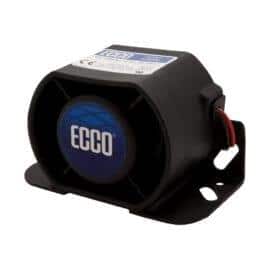
Is a backup alarm required by law?
For standard vehicles, there is no general Dutch vehicle regulation requiring every vehicle to be equipped with a backup alarm. However, this does not mean that an employer can decide, without further assessment, that such a warning system is unnecessary.
The Working Conditions Decree sets requirements for mobile work equipment whose movement may pose a hazard to employees. For example, such equipment must be equipped with effective devices to ensure adequate visibility if the driver’s direct field of vision is insufficient. There must also be reliable devices available for signaling. In addition, employers must take measures to prevent employees from entering the work zone of moving work equipment. Source: Working Conditions Decree, Articles 7.17b and 7.17c.
Whether a backup alarm is required therefore depends, among other things, on:
- the risk assessment and evaluation;
- the type of vehicle or machine;
- the driver’s direct and indirect visibility;
- the nature of the work;
- the presence of employees and bystanders;
- the layout of the work site;
- the measures specified in an industry-specific occupational safety and health catalog;
- regulations issued by a client or site manager.
In practice, a backup alarm may therefore indeed be necessary to comply with the duty of care and safety requirements, even if the alarm is not specifically mentioned in vehicle regulations for every individual vehicle.
Clients may impose additional requirements
Additional safety regulations often apply at construction sites, industrial parks, and distribution centers. For example, a client may require that all vehicles reversing be equipped with:
- an audible reverse alarm;
- a camera or 360° camera system;
- person or object detection;
- a rotating or flashing light;
- a spotter during special maneuvers;
- automatic braking intervention.
Therefore, before deploying a vehicle, check not only general legislation but also the RI&E, occupational safety catalog, bidding requirements, and local work regulations.
Why Install a Reverse Alarm After All?
A backup alarm is a relatively simple safety feature with an immediately recognizable function. The signal is automatically activated as soon as reverse gear is engaged.
The main advantages are:
- bystanders are immediately warned;
- the signal draws attention to a moving vehicle;
- it helps prevent collisions and damage;
- it improves safety on construction sites and business premises;
- the system operates without any additional action required from the driver;
- the investment is minimal compared to the potential costs of accidents and damage.
A backup alarm does not solve the driver’s visibility problem. Mirrors, cameras, detection systems, and safe work procedures remain necessary for that purpose.

What types of backup alarms are available?
Traditional beeping alarm
The traditional backup alarm produces the familiar repeating beep. This sound carries relatively far and is immediately recognizable to most people.
This model may be suitable for:
- open industrial sites;
- locations with a lot of ambient noise;
- applications where a wide-area warning is desired;
- vehicles used during the day.
One drawback is that the beep can bounce off buildings and other objects. This can sometimes make it difficult to determine the direction from which the vehicle is approaching. Furthermore, the sound may be audible from a greater distance and cause a nuisance.
White-noise alarm
A white-noise alarm produces a broadband, crackling sound. The signal is more directional and therefore easier to locate. People can more quickly determine from which direction the danger is approaching.
The sound is more confined to the area behind the vehicle and diminishes more quickly outside that zone. As a result, it generally causes less disturbance to nearby residents and employees who are not in the danger zone.
White noise is particularly suitable for:
- work in residential areas;
- early-morning waste collection;
- nighttime operations;
- distribution centers;
- warehouses and industrial facilities;
- locations where multiple vehicles are operating simultaneously.
Self-Adjusting Reverse Alarm
A self-adjusting or smart backup alarm measures ambient noise and adjusts the warning volume accordingly. In a busy and noisy area, the alarm sounds louder, while in a quiet environment it produces less noise.
This ensures the signal remains audible without always operating at maximum volume. This supports both safety and the reduction of noise pollution.
Self-adjusting models are available with a traditional beep or white noise.
Voice Alert
For specific vehicles, a voice warning can be used, for example: “Caution, this vehicle is backing up.” A voice message can be clear, but it isn’t the best choice in every environment.
Language, intelligibility, ambient noise, and repetition all play a role here. Rietveld therefore assesses which signal is most effective for each specific application.
What volume is needed?
An alarm must be audible above ambient noise, but should not be unnecessarily loud. A signal that is too soft fails to serve its purpose. Conversely, a continuously very loud alarm can lead to noise pollution or habituation.
When making this choice, the following must be taken into account:
- the average ambient noise level;
- peak noise levels from machinery;
- indoor or outdoor use;
- distance from residential areas;
- daytime or nighttime operation;
- the number of vehicles at the location;
- the direction in which the warning signal is needed.
A smart or self-adjusting alarm is particularly valuable when noise levels fluctuate significantly throughout the day.
For which vehicles is an alarm suitable?
Reverse alarms can be installed on a wide range of vehicles and machinery:
- trucks and box trucks;
- dump trucks and concrete mixers;
- garbage trucks and street sweepers;
- vans;
- forklifts and reach trucks;
- wheel loaders and shovels;
- excavators;
- agricultural machinery;
- cranes and telehandlers;
- internal transport equipment.
The product must be compatible with the vehicle’s voltage, mounting position, noise requirements, and the conditions in which the vehicle is used. For heavy-duty equipment, dust, water, shock, and vibration resistance are also important.
An alarm is not a complete safety solution
A backup alarm warns people outside the vehicle, but does not tell the driver whether anyone is actually behind the vehicle. Furthermore, the system does not prevent a vehicle from continuing to move when there is a risk of collision.
A comprehensive approach can consist of multiple layers:
Rearview camera
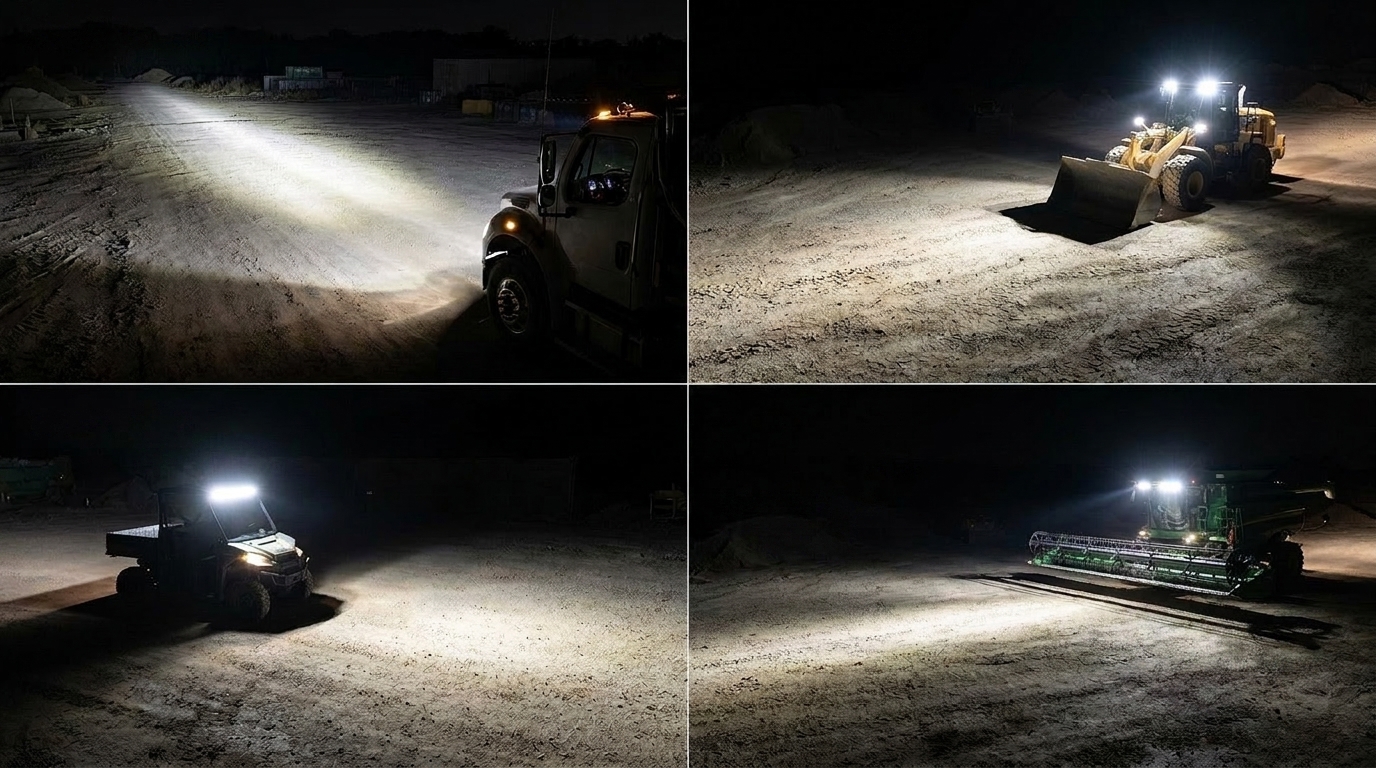
A camera provides the driver with a real-time view of the area behind the vehicle. Good work lighting enhances the camera image in the dark.
360° bird’s-eye view
Multiple cameras are combined into a single top-down view. This gives the driver a better overview of the vehicle’s immediate surroundings.
AI detection
AI cameras can recognize people and certain objects within predefined zones. The driver receives a targeted warning only when a relevant risk arises.
Automatic Braking Intervention
For vehicles and machinery with a high risk of collisions, a system like EasyBrake can automatically apply the brakes if the driver does not react in time.
Safe Work Organization
Technology must be combined with clear driving routes, separate pedestrian routes, speed limits, instructions, and supervision. The Arboportaal emphasizes that mobile work equipment must be operated by employees with the necessary expertise.
Which backup alarm is right for your application?
The right choice depends on both the vehicle and the environment:
- Choose a traditional alarm when a widely recognizable signal is needed.
- Choose white noise when locatability and minimal noise disturbance are important.
- Choose a self-adjusting alarm when ambient noise varies significantly.
- Combine the alarm with cameras or sensors when visibility is poor.
- Ensure that the entire safety approach aligns with the RI&E and local regulations.
Alert where needed
Through EasyAlarms, Rietveld offers various alarm and warning solutions for vehicles and machinery. The product line includes traditional alarms, white-noise alarms, and self-adjusting models from high-quality suppliers.
Our specialists assess, among other things:
- which vehicle or machine is involved;
- where the equipment is used;
- how much ambient noise is present;
- whether noise pollution poses a risk;
- which safety regulations apply;
- what camera and detection systems are already in place;
- whether a combined solution is desirable.
Rietveld then provides consulting, planning, professional installation, and support.
Together, we enhance your fleet of vehicles and machinery
A backup alarm is not automatically required by law on every vehicle. However, it may be necessary based on the Risk Inventory and Evaluation (RI&E), occupational health and safety regulations, the work environment, or client requirements. More importantly, it’s a simple and effective way to warn bystanders in a timely manner.
Would you like to know which backup alarm—or which combination of warning, visibility, and detection—is right for your vehicles? Our safety specialists will work with you to develop a solution tailored to your employees, equipment, and work environment.

Together, Skilled, Moving forward >
Types of work lights: Which one should you choose for your vehicle or machine?
Driving and Rest Times 2026: Rules and Tachograph Requirements | Rietveld